Symptom · Alameda, CA · 94501 / 94502
Sub-Zero Refrigerator Leaking Water in Alameda, CA
A puddle under the unit, water in the bottom of the freezer, or a trickle down the back wall — a leaking Sub-Zero almost always comes from one of four places. Here is how to tell which, why the Island's damp air makes it worse, and when it is safe to clear yourself versus when to call.
4.9/5 · 1,063 verified customer reviews
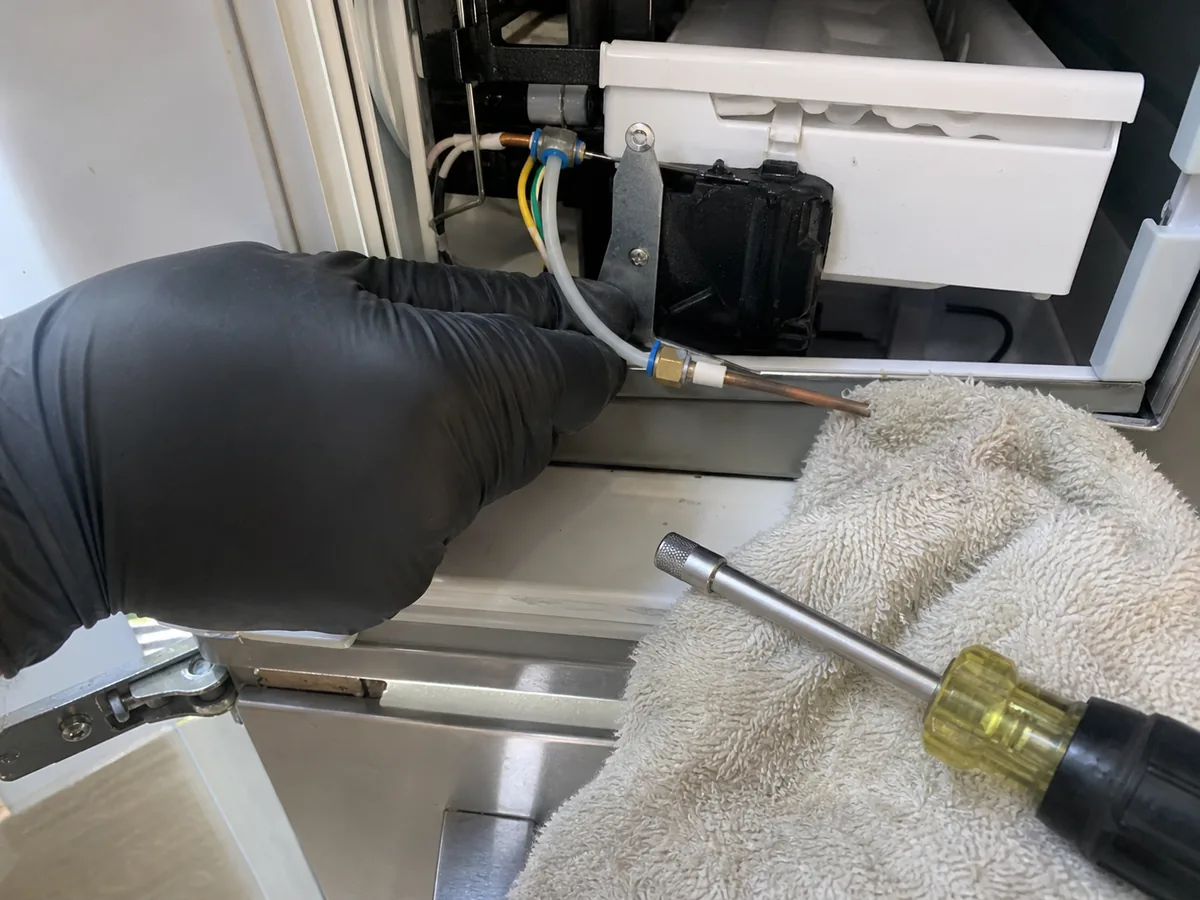
A leaking Sub-Zero rattles Alameda owners more than most faults, and for a good reason: the water is not just an appliance problem, it is a threat to the floor it sits on. Many of these refrigerators are built into homes a century old — the original hardwood of a Gold Coast Victorian, the fir floors of an East End bungalow, the custom millwork of a Bay Farm kitchen — and a slow drip that wicks under the cabinet can do quiet damage long before the puddle gets your attention.
The encouraging news is that a leak narrows down quickly. Where the water sits tells you most of what you need to know, and only a handful of parts are ever responsible. The Island's marine climate is the thread that runs through all of them: the estuary keeps indoor humidity high, so these units produce more condensate than a drier inland kitchen, and any drain or seal that is already marginal is the one that gives way first during fog season.
Below are the four real sources, a safe triage you can run in ten minutes, and the line between what an owner can clear and what needs a specialist.
Where the water is actually coming from
A frozen or clogged defrost drain
The most common cause we find on the Island. The defrost cycle melts frost into a small drain at the back floor of the freezer; on Alameda's damp air that drain ices over or silts up, the meltwater backs up, and it eventually finds its way out as a pool inside the freezer or a trickle onto the kitchen floor.
An overflowing condensate pan
Normal condensate is supposed to evaporate from a shallow pan near the compressor. When the estuary keeps indoor humidity high for weeks, the pan can take on more water than it sheds, or a cracked pan and a tired drain hose let it seep — showing up as water under the unit, never inside it.
The ice-maker fill line or inlet valve
A water leak that appears only after the ice maker cycles points at the fill tube, the inlet valve, or a saddle-valve connection behind the cabinet. Hard Alameda water scales these fittings, and a hairline weep can run down the back wall long before you spot the puddle.
A door that no longer seals
When the gasket stops sealing, warm humid Island air slips inside and condenses on the cold interior — dripping down the liner and pooling in the bottom of the compartment. This is leaking water with a different cause entirely, and it is why a marginal seal is worth catching early.
Two of these have dedicated repair pages worth reading next: if the cause is a failing door gasket, that page covers the seal replacement, and if it tracks with ice production, start with the ice-maker fill line.
Trace the leak yourself — 6 safe steps
-
Find where the water actually sits
Note whether the water is inside a compartment, under the unit on the floor, or running down the back wall. Inside points at a defrost drain or door seal; under the unit points at the condensate pan or a supply line.
-
Check the freezer floor for an ice sheet
Open the freezer and look at the floor under the bottom basket. A thin sheet of ice or a frozen puddle is the signature of a blocked defrost drain — the meltwater froze before it could escape.
-
Look at the drip pan and compressor zone
If the floor under the unit is wet but the inside is dry, the condensate pan or its hose is the suspect. On built-ins this sits behind the lower grille; do not force panels, just look for standing water and staining.
-
Watch the ice maker through a cycle
If the leak tracks with ice production, inspect the fill line and the shutoff behind or beneath the cabinet for damp fittings or mineral crust. Closing the saddle valve will stop a supply-line leak while you wait for service.
-
Test the door seal with a slip of paper
Close the door on a strip of paper and tug; if it slides out with no drag, the gasket is not gripping at that point. Run it around all four sides — a seal that fails along the hinge side lets in the most humid air.
-
Protect the floor and photograph the rating plate
Lay down a towel to protect original hardwood, then photograph the model and serial on the interior plate. Send those with a note of where the water sits, and the right part rides on the van.
Clear it yourself, or call?
Some leaks are genuinely owner-clearable. A defrost drain blocked by a soft ice plug will often flush clear with warm water, and a saddle valve you can reach can be closed to stop a supply-line weep until help arrives. Catching either early can save a floor.
What is not a DIY job is a drain that re-freezes within days — that points to a failed drain heater rather than a one-off plug — or a condensate pan and hose you cannot inspect without pulling a built-in out of its cabinet. Forcing panels on a flush column is how liners get cracked and how an inexpensive fix becomes an expensive one. If the leak returns, if it is coming from under the unit, or if the door no longer seals, it is time for a specialist. You can see what these repairs typically cost before you book, and if the fridge is also warming up, our not-cooling diagnostic covers that side of things. For the full range of Sub-Zero work and where we cover, see our Sub-Zero repair hub and Alameda service areas.
Sub-Zero leaking water — Alameda questions
Why is my Sub-Zero leaking water onto the floor in Alameda?
Four faults cause almost every Sub-Zero leak we see here: a frozen or clogged defrost drain, an overflowing condensate pan, a weeping ice-maker fill line, or a door gasket that no longer seals. Water on the floor specifically — rather than inside the compartment — usually means the condensate pan or a supply line, while water inside points to the defrost drain or the door seal.
Is this the same problem as my door gasket or my ice maker?
It can overlap, but the intent is different. This page is about tracing where standing water comes from. If the cause turns out to be the seal, our door-gasket page covers that repair in depth; if it tracks with ice production, our ice-maker and water-line page is the right next read. A leak is the symptom — those pages are the specific fixes.
Can I clear a blocked defrost drain myself?
Sometimes. If you can safely reach the drain opening at the back floor of the freezer, flushing it with warm water can clear a soft ice plug, and that buys time. But a drain that re-freezes within days usually has a failed drain heater or a deeper blockage, and on a built-in it is easy to damage the liner — at that point it is a service call, not a DIY.
Why does my Sub-Zero leak more in Alameda's foggy months?
Marine humidity is the reason. The estuary keeps indoor air moist for long stretches, so the unit produces more condensate than a drier inland kitchen, and any drain that is already marginal tips into a backup. The same damp air ages door gaskets, which lets still more humid air inside to condense. The leak was usually building quietly before the fog season made it obvious.
Will a leak damage my floors or cabinetry?
It can, which is why we treat it as time-sensitive in Alameda's older homes. A slow defrost-drain leak can wick under the unit and into the original hardwood of a Gold Coast Victorian or an East End bungalow before anyone notices. Lay a towel down, slide a tray under any visible drip, and book a visit rather than waiting to see whether it stops.
How fast can you come out?
Often the same week, and same-day when a leak is actively threatening floors. Call (510) 390-9712 or book online, and you will get a defined arrival window anywhere on the Island, from the East End and the Gold Coast to Bay Farm and Harbor Bay.
Stop a Sub-Zero leak before it reaches the floor
Tell us where the water is sitting and the model number, and you will get a real first opinion and a clear price — no guessing, no sales pitch.