Symptom · Door gasket & cabinet seal
Why is my Sub-Zero door sweating, frosting, or leaking cold air?
When a Sub-Zero in Alameda shows a door gasket leak, beads of condensation, or a frost line along the seal, it is almost always warm, humid air slipping past a tired magnetic gasket — not a failed cabinet. Off the estuary and near Webster Street, the marine factor matters: salt air and fog cycles swell and stiffen seals years sooner than they would inland, so the gasket stops compressing evenly against the flange. We confirm it with a seal-compression check, then fit the correct factory-authorized OEM gasket profile for your model. Calling first lets us pre-check parts.
The short answer
How do you fix a Sub-Zero door gasket that won't seal?
A worn or distorted magnetic gasket lets warm air past the seal, so you get condensation, frost lines and a sweating door — fast in Alameda's salt air and estuary fog. We test seal-compression contact and hinge geometry first, then fit the serial-matched OEM profile only once the door sits square.
How a seal problem actually shows up
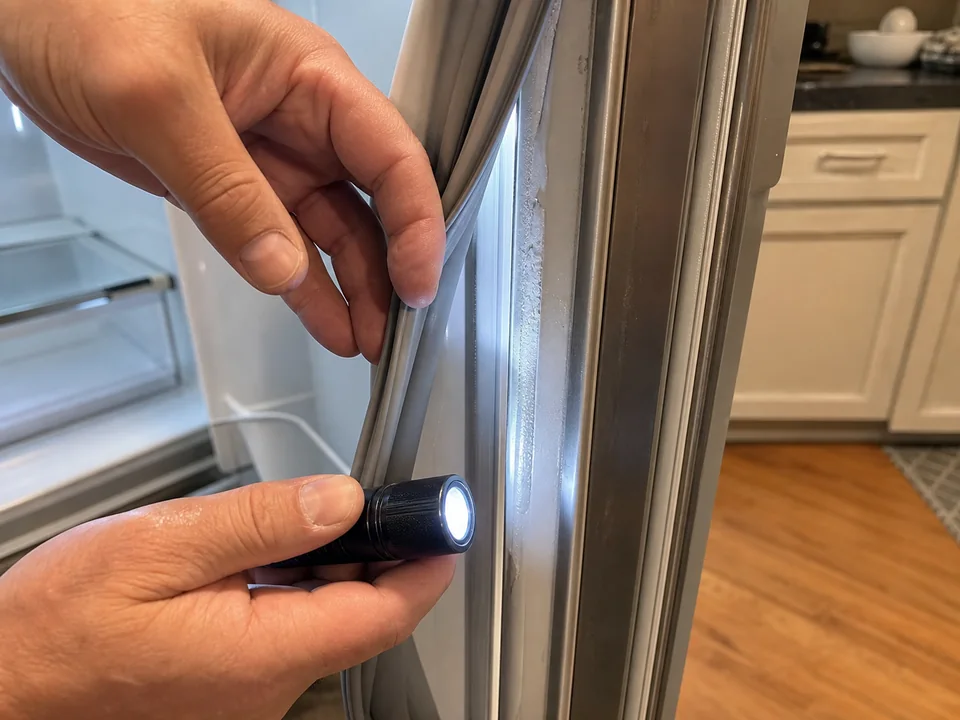
Most owners notice the seal before they understand it. The door feels slightly loose, or there is a thin bead of water along the inside edge in the morning, or a creeping white frost line traces the gasket on the freezer side. Some hear the unit running longer than it used to. A small amount of edge condensation on a humid Alameda day, right after a long door-open while you unload groceries, is normal — it clears within an hour as the seal pulls the door shut and the interior recovers. What is not normal is persistent sweat that returns daily, a frost line that thickens week over week, a corner where the gasket no longer touches the flange, or a door that drifts open on its own. Those mean the seal is no longer doing its one job: holding warm, moist air out.
A quick home test: close the door on a strip of paper and pull. If it slides out with no drag anywhere along the perimeter, that section of gasket is not compressing. Walk the whole door — top, hinge side, latch side, bottom — because a seal often fails in just one zone where the rubber has taken a set.
Standing water, warming food, or an alarm changes things
A sweating door alone is rarely urgent. But if you find standing water pooling in the cabinet or on the floor, the food turning soft, frost packing around a fan, or a service code on the display, stop loading the unit and call. At that point the seal may be a symptom of something deeper — a defrost fault or a sealed-system question — and continuing to run it can let temperatures drift past the point where food is safe.
Ranked causes — simplest fix to most involved
A sweating or frosting door has a handful of likely causes, and they run from a five-minute adjustment to a sealed-system investigation. We work this list in order, because confirming the cheap cause first is what keeps an honest repair honest. The "test" column is what separates one from the next.
| Likely cause | Signs you'd see | How we test it | Typical repair |
|---|---|---|---|
| Door left ajar / over-packed shelf | Sweat only after heavy use; clears on its own | Watch the door self-close; check shelf clearance | Adjust loading; no part needed |
| Gasket dirty or sticky | Seal grabs then releases; grime in the channel | Clean and re-seat; re-run the paper-strip test | Clean & condition the seal |
| Door sag / hinge alignment | Gap at one corner; seal touches unevenly | Level door, measure flange gap top vs. bottom | Hinge / door alignment |
| Stiffened or torn gasket | Hard, cracked, or set rubber; visible tear | Seal-compression check; confirm profile by serial | factory-authorized OEM gasket in correct profile |
| Panel-ready misalignment | Integrated door front sits proud or twisted | Check bracket torque and reveal gaps | Re-square panel; reset compression |
| Heater / anti-sweat circuit fault | Frame stays cold and damp where it shouldn't | Measure mullion/frame heater continuity | Heater or harness repair |
| Defrost or airflow issue behind the line | Thick frost that keeps returning; long run times | Compartment temps + defrost check | Defrost / fan repair, not just a seal |
If the door, hinge, and gasket all check out and the sweat or frost keeps coming back, the seal was a clue, not the disease. That is the point where we stop swapping rubber and look at defrost and airflow — and, if both compartments are warming, at the sealed system.
The evidence we put on the record
When a sweating door turns out to hide a sealed-system suspicion, the difference is too expensive to guess at. In plain terms: a sealed system is the closed refrigerant loop that makes the cabinet cold, and if it loses charge it is because there is a leak — you cannot simply add gas back. Confirming it needs EPA-certified verification, meaning a proper leak and pressure test, because refrigerant is regulated and a top-off without finding the leak is both illegal and useless. What diagnosis confirms it: matching compartment temperatures against a normal recovery curve, then leak-testing and reading system pressures. The honest limitation is that before we open the panel and put gauges on it, we cannot tell you whether a marginal seal is the whole story or whether a slow refrigerant leak is dragging humidity in behind it — that answer only comes from on-site measurement.
Reseating a built-in is the part most likely to go wrong
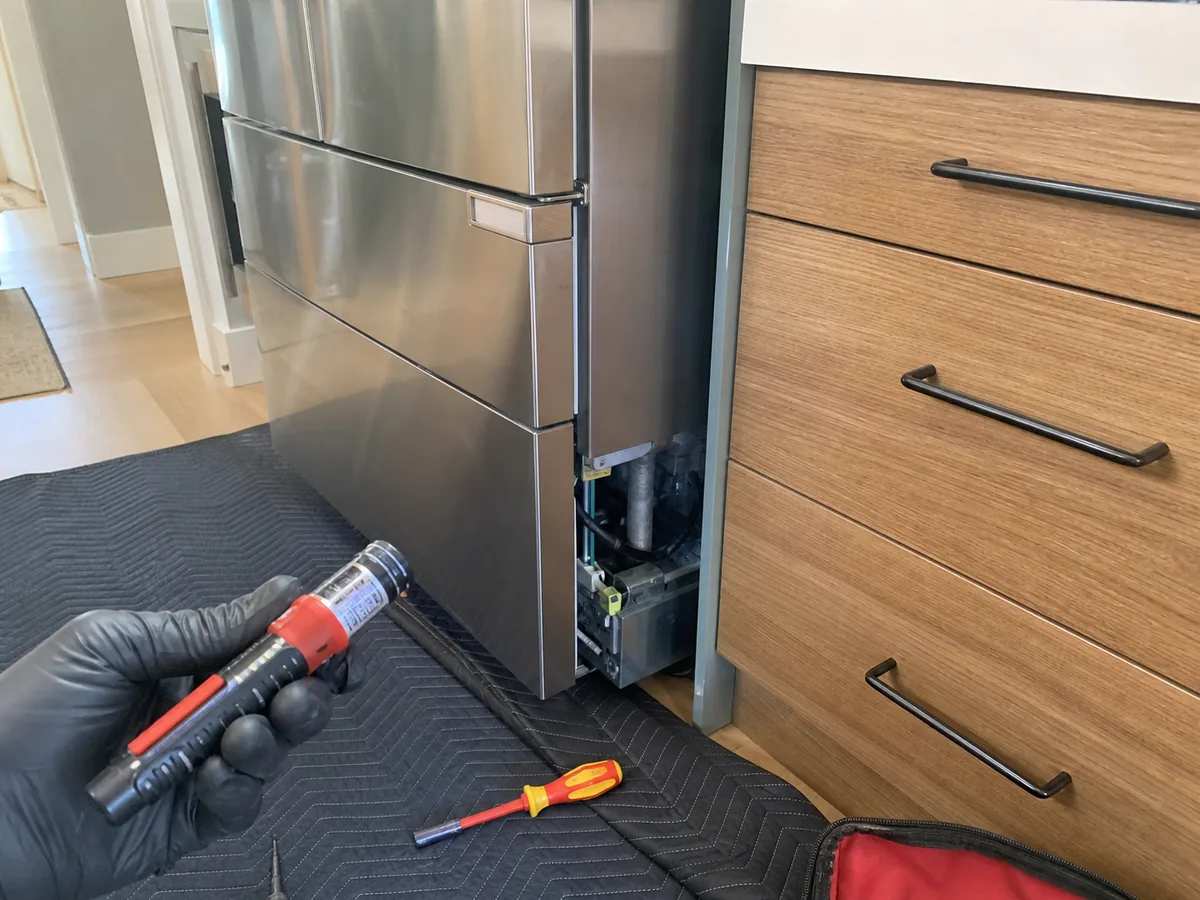
Some seal and alignment fixes need the door, the panel, or the whole built-in eased forward to reach the hinge or the frame heater — and a careless pull past tight waterfront cabinetry is exactly how cosmetic damage and a fresh misalignment happen. We treat the removal and reseat as its own controlled step, and we document the evidence around it: temperature readings before and after, condenser/evaporator photos, model-tag proof so the gasket and parts match your serial, and factory-authorized OEM fan/gasket/control-board evidence for anything we touch. That record is what proves the seal was actually the fault — and that the cabinet went back square. More on protecting the surround is on our cabinet-safe built-in service page.
Why Alameda seals fail the way they do
Near Crown Memorial Beach the marine factor is at its strongest, and it changes the whole service plan, not just the part. Homes along that shoreline sit in steady humidity and salt air, with fog rolling in most evenings, so gasket swelling and condenser corrosion arrive years early and a seal that compressed perfectly when installed has taken a set by the time we see it. The home age matters too: many of the island's Victorians carry built-ins retrofitted into original casework, where the clearance is tight, the routing for water and power threads through old walls, and the appliance mix can put a column fridge next to an undercounter unit that each need a different gasket profile. Access alone can be half the visit, because easing a unit forward past period millwork near the waterfront has to be careful and slow.
That is also why we do not reuse a generic seal checklist here. The same BI-series door that sweats in a dry, newer Bay Farm kitchen is fighting far more moisture three blocks off Crown Memorial Beach, and the fix has to account for both the gasket and the humid air load behind it. We plan extra time for those calls because the seal, the flange, and the corrosion around them all want a look before we call the job done.
Test your Sub-Zero door seal in four steps
Before you call, these checks tell you whether the gasket is the real problem. They take a couple of minutes and need no tools beyond a dollar bill.
Run the dollar-bill test
Close a dollar bill in the door and pull it out. If it slides free with almost no drag at several points around the door, the gasket isn't compressing and is leaking air.
Look for a frost line or sweat beads
A frost line along the freezer seam, or sweat beads on the door panel in Alameda's humid air, points to warm air slipping past the seal.
Check the door reveal and sag
Sight the gap around the closed door. An uneven reveal, or a door dropped at the handle side, stops the gasket from sealing evenly.
Photograph the rating plate
The serial decides which of several Sub-Zero gasket profiles fits, so send it before the visit and the right factory-authorized OEM seal rides on the van.
What a Sub-Zero seal repair tends to run in Alameda
A gasket and alignment fix is one of the more affordable Sub-Zero repairs. The table lists typical Alameda estimates; your real number is set on site once the serial confirms the gasket profile and the door alignment is checked.
| Service / symptom | What's included | Price range | Timeframe |
|---|---|---|---|
| Diagnostic / service call | On-site seal-compression check, model & serial confirmed, written findings (credited) | $115–$185 | Same visit |
| Seal clean & door re-seat | Gasket cleaned and door reseated, reveal re-checked | $125–$215 | 1 visit |
| Door gasket & alignment (single door) | factory-authorized OEM magnetic gasket in the correct profile, alignment corrected | $215–$395 | 1 visit |
| French-door / side-by-side gasket set | Both gaskets matched and aligned across the cabinet | $320–$560 | 1 visit |
| Hinge / panel-ready re-square | Sagging door and panel re-squared so the seal compresses evenly | $235–$455 | 1 visit |
| Frame / mullion anti-sweat heater | Frame-heater circuit diagnosed and repaired | $285–$565 | 1 visit |
Typical Alameda estimates, not a quote.
What determines the final price: whether it's a clean seal swap, a hinge and panel re-square, or a frame-heater repair, and whether a deeper defrost or sealed-system fault is hiding behind the sweat. When that turns up on an older cabinet, repair vs. replace shows where the math tips.
Sweating door? Let's match the gasket profile first.
Tell us the symptom and send a photo of the Sub-Zero rating plate. The serial decides which gasket profile fits, so we can check parts and confirm an Alameda visit before you commit to an appointment.
Door gasket & seal questions
Why does my Sub-Zero door sweat or grow a frost line in Alameda?
A magnetic door gasket that has stiffened, swelled, or torn lets warm, humid marine air leak past the seal. Where that air meets the cold door panel or liner it condenses into beads of sweat, and where it reaches a freezer surface it forms a frost line. The fix starts with a seal-compression check, not a new control board. See the full Sub-Zero repair page for how we work the whole unit.
Can I just replace the Sub-Zero gasket myself?
You can, but the wrong profile or a gasket seated without correcting door sag often sweats again within weeks. Sub-Zero uses several gasket profiles across BI, IC and UC generations, and the serial number decides which one fits. We confirm the profile and check door alignment so the new seal actually compresses evenly.
Is a sweating Sub-Zero door an emergency?
Usually not, but it should not be ignored. A leaking seal makes the sealed system run longer, raises interior humidity, and can let frost build until temperatures drift. If you also see standing water, warming compartments, or a service alarm, stop loading the unit and call so we can separate a seal problem from a deeper fault.
Could condensation mean my sealed system is failing instead of the gasket?
It can. If both compartments warm while the door sweats, that points away from a simple gasket and toward a sealed-system question that needs EPA-certified verification — a leak and pressure test — before any refrigerant or compressor talk. We measure compartment temperatures and check the seal compression first to tell the two apart. Pricing for both paths is on repair vs. replace.
How much does a Sub-Zero door gasket cost in Alameda?
A gasket and alignment fix in Alameda typically runs $215–$395 for a single door, plus a $115–$185 diagnostic credited to the work; a French-door or side-by-side set runs $320–$560. The exact number depends on which factory-authorized OEM profile your serial calls for and whether the door also needs re-squaring. It's one of the more affordable Sub-Zero repairs.
Why do gaskets fail faster near the Alameda waterfront?
Salt-laden fog and steady humidity off the estuary swell and stiffen the rubber faster than dry inland air, so gaskets in Fernside, the Gold Coast, and Bay Farm Island lose their seal sooner. We see more sweating doors and frost lines on those blocks, and we check the condenser for matching salt corrosion while we're there.
Alameda · Sub-Zero owners
What Alameda customers say
The freezer door was sweating and a frost line was forming along the seam. They matched a new gasket to the correct profile for our model and reset the door reveal — it seals tight again and the condensation is gone.
Living near the estuary, the salt air is brutal on seals. They checked the door alignment and defrost cycle before blaming the gasket — the seal really was shot, but I trusted the process because they ruled out the other causes first.
Years of fog and marine air had stiffened the gasket on our built-in until cold was leaking past the top corner. They swapped it for the right profile, reseated the door, and the condensation is gone. Quick fix, fair price.
Keep reading · Alameda
More from the Alameda service file
A maintenance calendar tuned to island air
Gaskets here age on a schedule the salt fog sets. The seasonal checks that catch a sweating seal before it costs compressor hours.
What a wine column should actually hold
A tired seal often shows up first as drift in a wine compartment. The setpoints we verify against, and how much wander is too much.
Our complete Sub-Zero repair service on the Island
Seals are one chapter. Cooling, ice, controls, and sealed-system work for Alameda's built-ins, end to end.