Maintenance guide · 5 min read
How to Clean a Fridge Outside: Steel, Seals and the Grille
Clean a fridge exterior safely: stainless with the grain, gaskets with mild soap, the condenser every 6 to 12 months. What to avoid and when to call a pro.
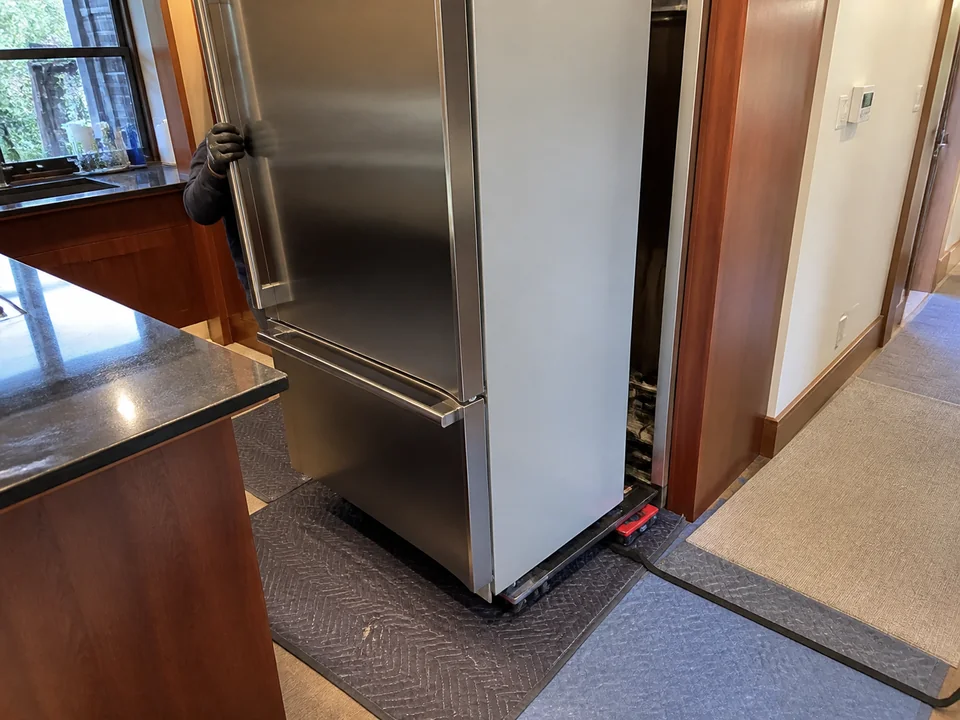
To clean a fridge outside, dust the doors, wipe stainless steel with a nonabrasive stainless cleaner on a soft lint-free cloth along the grain, and wash the door gaskets with mild detergent and water. On a built-in Sub-Zero, add one step every 6 to 12 months: vacuuming the condenser behind the grille or kickplate. If your kitchen sits in one of the roughly 4,000 pre-1940 Victorians and Edwardians on this Bay island, in the East End or the Gold Coast, the refrigerator may be wrapped in painted or stained millwork, so a gentle method protects the cabinetry as well as the appliance.
How do you clean a stainless steel fridge exterior?
Start with a dry microfiber pass over the Sub-Zero stainless doors to lift grit, since dragging dust across brushed steel leaves fine scratches. Apply a nonabrasive stainless cleaner to the cloth rather than spraying the door, which keeps overspray off the gasket, the control panel and wood trim. Wipe in long strokes with the grain, then buff with a clean dry cloth.
Sub-Zero handles collect the most fingerprints and cooking grease. Warm water with a drop of dish soap lifts that film; dry the handles right away to prevent water spots.
Panel-ready Sub-Zero doors follow the cabinetmaker's finish care instead: a barely damp soft cloth, mild soap if needed, and immediate drying. Stainless polish never goes on a wood panel.
What should you not clean a fridge with?
Abrasive pads, steel wool and scouring powder are the most common mistake on a Sub-Zero exterior. They cut across the brushed grain, and those scratches are permanent.
Vinegar and rubbing alcohol are the next trap. Sub-Zero warns against both on door gaskets and inside the cabinet, so check any homemade spray before using it near a seal.
Chlorine bleach does not belong on stainless steel, because chlorides can stain and pit the finish. Diluted bleach belongs only on a moldy gasket.
Chemical condenser cleaners are unnecessary too; Sub-Zero does not recommend them. Knives and razors used to scrape off a stuck label will gouge stainless doors.
How do I clean the refrigerator door and its gasket?
The Sub-Zero door gasket is the magnetic seal around each door, and it deserves a monthly wipe. Turn the unit off, then wash the folds with mild detergent and warm water on a soft cloth. Use a baking soda paste for tough stains or a 1:10 bleach-to-water mix for mold or mildew, then rinse and dry.
While the Sub-Zero gasket is clean, test it. ENERGY STAR advises keeping refrigerator door seals airtight and replacing them when they are not. Close the door on a strip of paper at several points; the paper should pull out with even resistance everywhere. A torn or flattened gasket needs replacement, which Alameda Sub-Zero Repair lists at $190-$430.
Why does the front grille belong in an exterior cleaning?
The grille on a built-in Sub-Zero is also the condenser's air intake. USDA guidance says to keep a refrigerator's front grill free of dust and lint and to clean the condenser coil several times a year with a brush or vacuum; a clogged grille makes the compressor run longer.
Sub-Zero's interval is every 6 to 12 months, more often with pets, and a unit under 6 months old can skip it. Classic (CL) condensers sit behind the flip-up grille; Designer (DET, DEC) condensers sit behind the kickplate, held by two screws. Turn power off at the control panel, wear gloves, and vacuum with a soft brush in the fin direction without bending the aluminum fins.
When should each exterior cleaning step happen?
Weekly: wipe the Sub-Zero handles, door edges and control panel with a damp soft cloth, then dry them.
Monthly: polish the stainless doors with the grain, wash the door gaskets, and vacuum the front grille.
Every 6 to 12 months: vacuum the Sub-Zero condenser.
Every 12 months: replace the Classic (CL) or Designer (DET, DEC) water filter, rated for up to 750 gallons (2,839 L) or twelve months, or sooner if the indicator shows, pressure drops or cubes turn hollow. Afterward, non-dispenser models discard the first two full bins of ice, and dispenser models run water for two minutes.
What does a professional tune-up add?
A technician's visit to a Sub-Zero covers the systems behind the surfaces: refrigerator and freezer temperatures against the settings, gasket compression, door alignment, the condenser and evaporator fan motors, and the defrost cycle. Sagging panel-ready doors can be adjusted without marking the millwork.
One reading means stop cleaning and call: Sub-Zero says a refrigerator above 48 degrees while set at 38 is unlikely to recover from a condenser cleaning. Alameda Sub-Zero Repair charges an $89 diagnostic fee, credited toward the repair if you go ahead.
Questions & answers
How do I clean my freezer?
Wash a freezer interior with soap, water and baking soda, never vinegar or alcohol-based cleaners. When manually defrosting, USDA warns against heating devices, ice picks, knives or other sharp objects, which can damage the inner lining.
Can I use vinegar on a Sub-Zero?
No. Sub-Zero advises against vinegar and rubbing alcohol on gaskets and interior surfaces. Use mild detergent and water, a baking soda paste for stains, or a 1:10 bleach-to-water mix only for mold or mildew on the gasket.
How often should I clean the outside of my fridge?
Wipe handles weekly, polish stainless doors and wash gaskets monthly, and vacuum the condenser every 6 to 12 months, more often with pets.
Does a dusty grille affect cooling?
Yes. Dust on the front grille restricts condenser airflow, so the compressor works harder. If the refrigerator reads above 48 degrees while set at 38, Sub-Zero says cleaning is unlikely to fix it; schedule service. Alameda Sub-Zero Repair handles this locally — call (510) 390-9712.
More Alameda guides
Wolf Oven Self-Cleaning Problems: Why the Cycle Fails and What to Do
Wolf oven self-clean won't start, door stuck locked or oven dead afterward? How the 800-900°F cycle works, how to run it safely and when to call a tech.
Read the guide → Choosing a repair service · 5 minHow to Verify a Sub-Zero Repair Company in Alameda: License, Insurance, and the Island Test
Three checks before you book Sub-Zero repair in Alameda: the free state registration lookup, a real insurance certificate, and the island logistics test.
Read the guide → Sub-Zero freezer not freezing · 4 minSub-Zero Freezer Not Freezing While the Fridge Stays Cold: An Alameda Diagnostic
Why a Sub-Zero freezer drifts warm while the fridge stays cold in Alameda: sealed-system vs defrost vs salt-fouled condenser, plus the $89 diagnostic.
Read the guide →Rather leave it to a specialist?
Have the failing compartment and the model number ready, and you will get a real first opinion — not a sales pitch.
| Stainless method | Nonabrasive stainless cleaner on a soft lint-free cloth, wiped with the grain |
|---|---|
| Gasket mold fix | A 1:10 bleach-to-water mix; skip vinegar and rubbing alcohol |
| Condenser interval | Every 6 to 12 months, more often with pets |
| Call a technician when | The refrigerator reads above 48 degrees while set at 38 |
| Local help | Alameda Sub-Zero Repair — (510) 390-9712 |
Book this repair: Sub-Zero Door Gasket & Cabinet Seal Repair in Alameda · Sub-Zero Maintenance Calendar for Coastal Alameda